Skin Cancer Screening
Know Your Skin. Find Changes Early. Get Care When It Matters.
Skin cancer is the most common cancer in the United States. Different types — including basal cell carcinoma, squamous cell carcinoma, and melanoma — vary in seriousness, but all share one thing: early detection improves outcomes.
At Community Care, we help you understand your personal risk, guide you through self- and clinical skin checks, and coordinate care with dermatology specialists when further evaluation or treatment is needed.
Understanding Your Risk
Everyone’s skin cancer risk is different, but certain factors are strongly associated with higher risk:
- Lifetime sun exposure — especially repeated sunburns
- Use of tanning beds
- Fair skin that burns or freckles easily
- Light hair and eye color
- A personal or family history of skin cancer
- Many moles or atypical (irregular) moles
- History of precancerous lesions (like actinic keratosis)
- Weakened immune system or prior radiation therapy
Talk with your doctor if you have any of these risk factors — regular evaluation may be advised.
Self-Exams: Your Most Important First Step
There’s no universal recommendation for routine skin cancer screening for everyone without symptoms, but regular self-exams are highly encouraged. Pay attention to new spots or changes in existing moles, freckles, or lesions — especially if they:
- Change in size, shape, or color
- Have irregular or jagged edges
- Appear asymmetrical (one half doesn’t look like the other)
- Bleed, itch, or don’t heal
- Look different from surrounding spots
Dermatologists often use the “ABCDEs” of melanoma (Asymmetry, Border irregularity, Color variation, Diameter >6 mm, Evolving) to evaluate suspicious moles.
If you notice anything unusual during a self-exam, report it to your doctor right away — earlier evaluation means earlier answers and better outcomes.
Clinical Skin Exams: When to See a Provider
Routine whole-body skin exams by a clinician are not officially recommended for everyone without symptoms because evidence hasn’t shown a clear mortality benefit at the population level. However, individual risk factors or suspicious findings warrant evaluation by a provider or dermatologist.
You should consider clinical skin evaluation if you:
- Have a personal history of skin cancer
- Have many atypical or changing moles
- Notice any new, growing, or changing spots
- Have significant sun damage or a strong family history
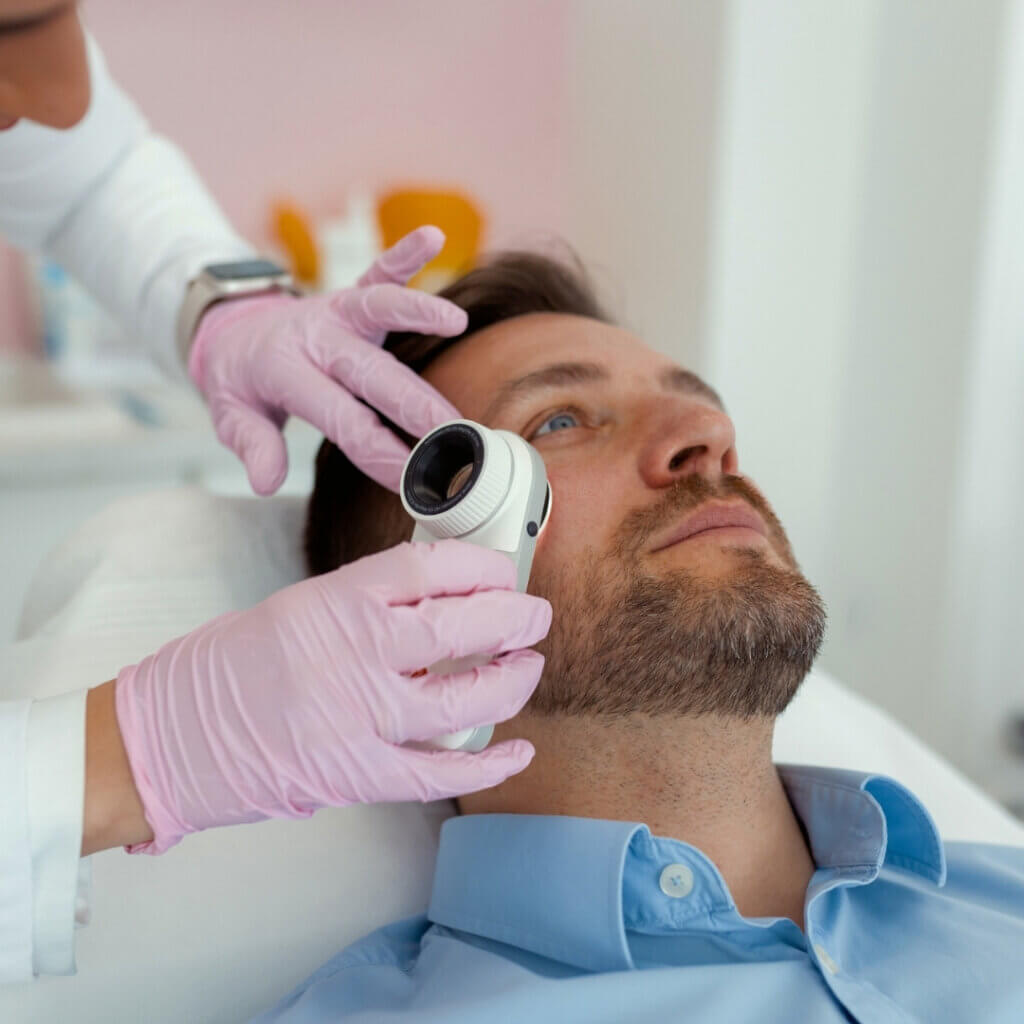
During a clinical skin exam, a dermatologist examines your entire skin surface. If anything looks concerning, a biopsy may be performed to determine whether cancer is present.
What Happens After a Suspicious Finding
If a mole or lesion appears unusual, your dermatologist may recommend:
- Monitoring with photos or regular follow-up
- Biopsy to remove part or all of the suspicious area for analysis
Biopsy results help guide next steps — whether it’s further treatment, removal, or routine monitoring. Early treatment of skin cancers, especially melanoma, greatly improves outcomes.
Skin Cancer Prevention Tips
In addition to monitoring your skin, protecting it can make a big difference:
- Use broad-spectrum sunscreen with SPF 30 or higher
- Wear protective clothing and wide-brimmed hats in the sun
- Seek shade, especially during peak UV hours
- Avoid tanning beds — UV exposure from artificial sources increases risk
Screening & Dermatology Services
Community Care Dermatology provides comprehensive skin evaluations, skin cancer screenings, and follow-up care tailored to your risk and needs. Our specialists are experienced in identifying suspicious lesions and coordinating care if further treatment is required.
Your Next Step
Know your skin. Do regular self-checks. And if you have risk factors or notice anything new or changing, schedule a professional skin evaluation — because early discovery is one of the most powerful tools in skin cancer care.
We’re here to help you understand your risk, get checked, and take action with confidence.